Buy easycrm.eu ?
We are moving the project
easycrm.eu .
Are you interested in purchasing the domain
easycrm.eu ?
domain@kv-gmbh.de · 0541-91531010
Buy easycrm.eu ?
What are river variables and potential variables?
River variables are physical, chemical, and biological characteristics of a river that can be measured and monitored to assess its health and quality. These variables include parameters such as water temperature, pH levels, dissolved oxygen, nutrient concentrations, and the presence of pollutants. Potential variables are factors that can influence or impact the river variables, such as land use practices, urban development, agricultural runoff, and climate change. Understanding both river variables and potential variables is essential for effective river management and conservation efforts. **
What is the difference between primitive variables and reference variables?
Primitive variables store the actual value, such as numbers or characters, directly in memory. Reference variables, on the other hand, store a reference to an object in memory rather than the actual value. This means that when working with reference variables, you are actually working with the object that the reference points to, while with primitive variables, you are working directly with the value stored in memory. Additionally, primitive variables are allocated on the stack, while reference variables are allocated on the heap. **


Similar search terms for Variables
Top-Angebote
Products related to Variables:
-
The Readers Paradise Psychology of Efficiency: Master Your Mind, Maximize Your Output by Rishav - Self-Help Paperback - Non Fiction Productivity BookDeadlines pile up, distractions multiply, and your to-do list never seems to shrink. Psychology of Efficiency: Master Your Mind, Maximize Your Output by Rishav goes beyond standard time-management advice to tackle the real root of low performance: the mind itself. Rather than offering another planner or app, this paperback guide explores the mental frameworks, habits, and triggers that quietly drain focus and output. Readers are shown how to identify exactly where attention leaks occur and how to close those gaps for good, building sustainable, high-level performance from the inside out. This brand new paperback is built around a simple idea: efficiency is first a psychological skill, not a scheduling trick. Rishav draws on practical psychology to show that thoughts shape actions, and actions determine results, so productivity becomes a manageable skill rather than an overwhelming task.2,99 £*Shipping: 2,99 £Secure redirect to the provider
-
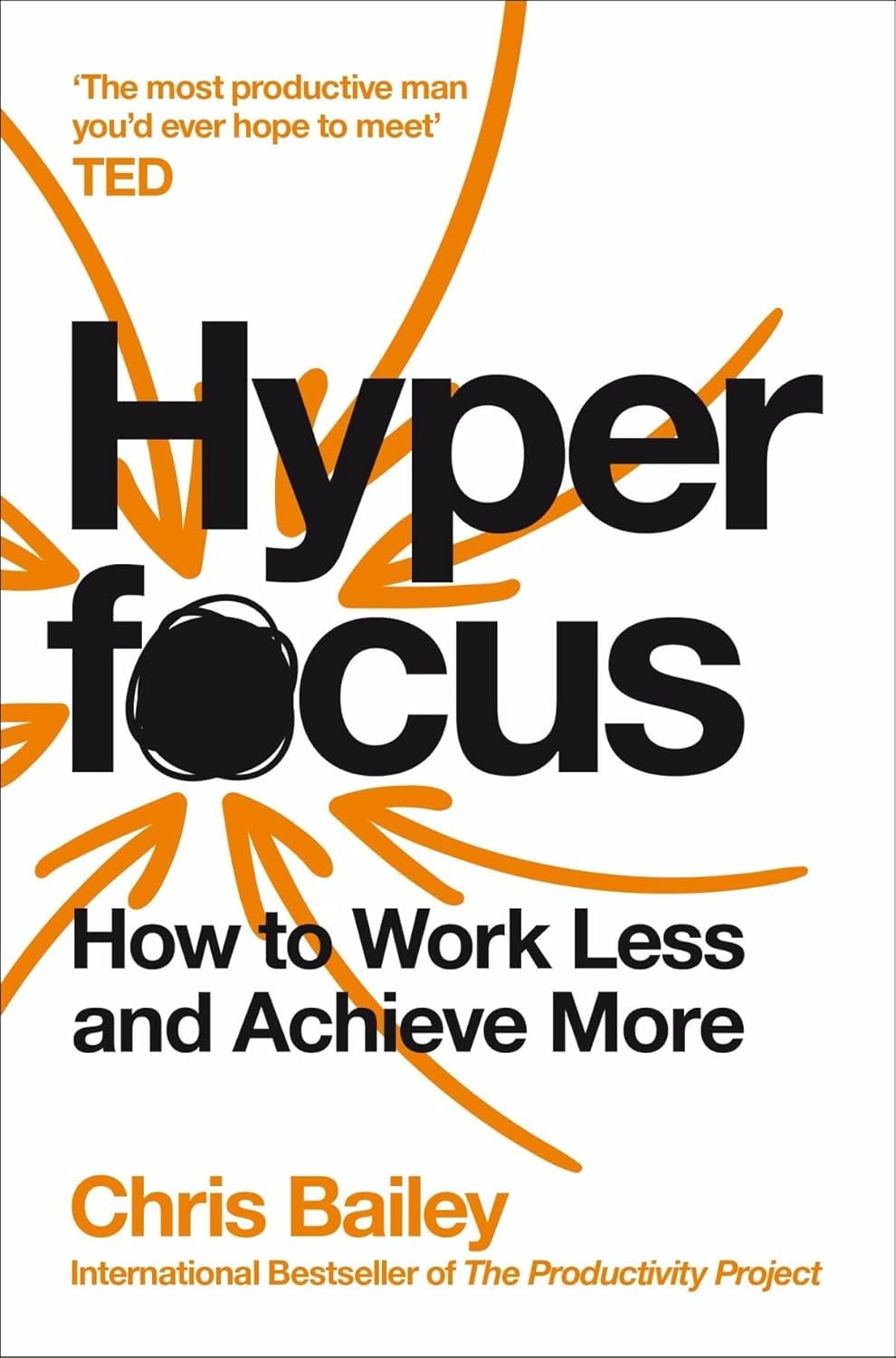
Various Publishers How To Talk To Anyone by Leil Lowndes & Hyperfocus by Chris Bailey - 2 Book Paperback Set - Communication & Productivity Self-Help - NewThis two-book paperback set includes 'How To Talk To Anyone: 92 Little Tricks for Big Success in Relationships' by Leil Lowndes and 'Hyperfocus: How to Be More Productive in a World of Distraction' by Chris Bailey. 'How To Talk To Anyone' delivers practical techniques for confident, memorable conversation, while 'Hyperfocus' offers a science-backed system for reclaiming attention and getting more done with less effort. The books are in new condition, published by HarperCollins and Pan Macmillan respectively, and are suitable for adult readers.9,99 £*Shipping: 2,99 £Secure redirect to the provider
-
Inspire Select 60 Minute Visual Countdown Timer Silent Time Management Clock For Kids Adults Kitchen Classroom Study & Productivity blueMake every minute easier to see, manage, and use with confidence. This easytoread visual countdown timer uses a disappearing colored disk to show how much time remains, helping children and adults build better time awareness. Simply turn the knob to...51,96 $*Shipping: 0,00 $Secure redirect to the provider
-
USA Free Shipping Shop Clear Cable Management Clips Transparent Adhesive Cable Clips For Desk & Wall Wire Organization Clear Cable Management Clips Transparent Adhesive Cable Clips For Desk & Wall Wire OrganizationTired of tangled cords stealing the calm from your space Our 30 pcs of cable management clips turn chaos into order with a virtually invisible solution youll appreciate every day. These clear, selfadhesive organizers are perfect for anyone who wants...49,97 $*Shipping: 0,00 $Secure redirect to the provider



-
What is the difference between ordinal scaled variables and ordinal variables?
Ordinal scaled variables are variables that have a specific order or ranking, but the intervals between the values are not necessarily equal. On the other hand, ordinal variables are variables that have categories with a natural order, but the numerical values assigned to them do not have any meaningful interpretation. In summary, ordinal scaled variables have meaningful numerical values with a specific order, while ordinal variables have categories with a natural order but lack meaningful numerical values. **
-
What are random variables?
Random variables are variables that can take on different values based on the outcome of a random event. They represent the possible outcomes of a random process and are used in probability theory and statistics to quantify uncertainty. Random variables can be discrete, taking on a finite number of values, or continuous, taking on any value within a range. They are essential for modeling and analyzing uncertain situations in various fields such as finance, engineering, and biology. **
-
What are reduced variables?
Reduced variables are a set of transformed variables that are used to simplify the analysis of a system or process. These variables are often obtained by scaling or normalizing the original variables to make them more manageable and easier to interpret. By using reduced variables, complex systems can be analyzed and understood more effectively, leading to better insights and decision-making. **
-
Can economic efficiency and productivity develop mutually?
Yes, economic efficiency and productivity can develop mutually. When businesses and industries become more efficient in their operations, they can produce more output with the same amount of input, leading to increased productivity. Similarly, when productivity increases, it can drive economic efficiency by reducing waste and improving resource allocation. Therefore, as businesses and industries focus on improving efficiency and productivity, they can reinforce and support each other's development. **

How do I solve an equation with form variables and solution variables?
To solve an equation with form variables and solution variables, you first need to isolate the solution variable on one side of the equation. This involves performing the necessary operations (addition, subtraction, multiplication, division) to move all other variables to the other side of the equation. Once you have isolated the solution variable, you can then solve for it by performing any additional operations needed to simplify the equation. Finally, you can substitute the solution back into the original equation to verify that it satisfies the equation. **
What is a local variable and what is the difference to instance variables, class variables, and normal variables in Java?
A local variable in Java is a variable that is declared within a method, constructor, or block of code and is only accessible within that specific scope. It is temporary and exists only for the duration of the method execution. The main difference between local variables, instance variables, class variables, and normal variables in Java is their scope and lifetime. Instance variables are declared within a class but outside of any method and are accessible to all methods within the class. Class variables are declared with the static keyword and are shared among all instances of a class. Normal variables refer to any variable that is not a local, instance, or class variable. **
Top-Angebote
Products related to Variables:
-
Multisell Products Hub DIY Voice Control Light Switch Module For Smart Home Automation With Tuya, Alexa & Google Home Integration DIY Voice Control Light Switch Module For Smart Home Automation With Tuya, Alexa & Google Home IntegrationUpgrade your home with the DIY Light Switch Module, bringing cuttingedge smart home automation to your fingertips. Perfect for those who want seamless control over their lighting and appliances, this module easily integrates with Alexa and Google...34,97 $*Shipping: 0,00 $Secure redirect to the provider
-
Various Publishers How to Talk to Anyone, Next Conversation & Psychology of Management - 3 Book Paperback Set - Communication, Leadership & Management PsychologyThis 3-book collection set brings together three practical, people-focused reads for anyone who wants to communicate better and lead more effectively. Leil Lowndes' classic 'How to Talk to Anyone' pairs with Jefferson Fisher's 'Next Conversation' and a foundational 'Psychology of Management' title to cover everyday conversation, conflict resolution, and workplace psychology in one bundle. Whether you are prepping for interviews, managing a team, or simply want to feel more confident in social situations, this paperback set offers accessible, actionable guidance you can start using immediately. The set includes 'How to Talk to Anyone' by Leil Lowndes, 'Next Conversation' by Jefferson Fisher, and 'Psychology of Management'.20,99 £*Shipping: 2,99 £Secure redirect to the provider
-
The Readers Paradise Psychology of Efficiency: Master Your Mind, Maximize Your Output by Rishav - Self-Help Paperback - Non Fiction Productivity BookDeadlines pile up, distractions multiply, and your to-do list never seems to shrink. Psychology of Efficiency: Master Your Mind, Maximize Your Output by Rishav goes beyond standard time-management advice to tackle the real root of low performance: the mind itself. Rather than offering another planner or app, this paperback guide explores the mental frameworks, habits, and triggers that quietly drain focus and output. Readers are shown how to identify exactly where attention leaks occur and how to close those gaps for good, building sustainable, high-level performance from the inside out. This brand new paperback is built around a simple idea: efficiency is first a psychological skill, not a scheduling trick. Rishav draws on practical psychology to show that thoughts shape actions, and actions determine results, so productivity becomes a manageable skill rather than an overwhelming task.2,99 £*Shipping: 2,99 £Secure redirect to the provider
-
Various Publishers How To Talk To Anyone by Leil Lowndes & Hyperfocus by Chris Bailey - 2 Book Paperback Set - Communication & Productivity Self-Help - NewThis two-book paperback set includes 'How To Talk To Anyone: 92 Little Tricks for Big Success in Relationships' by Leil Lowndes and 'Hyperfocus: How to Be More Productive in a World of Distraction' by Chris Bailey. 'How To Talk To Anyone' delivers practical techniques for confident, memorable conversation, while 'Hyperfocus' offers a science-backed system for reclaiming attention and getting more done with less effort. The books are in new condition, published by HarperCollins and Pan Macmillan respectively, and are suitable for adult readers.9,99 £*Shipping: 2,99 £Secure redirect to the provider
-
What are river variables and potential variables?
River variables are physical, chemical, and biological characteristics of a river that can be measured and monitored to assess its health and quality. These variables include parameters such as water temperature, pH levels, dissolved oxygen, nutrient concentrations, and the presence of pollutants. Potential variables are factors that can influence or impact the river variables, such as land use practices, urban development, agricultural runoff, and climate change. Understanding both river variables and potential variables is essential for effective river management and conservation efforts. **
-
What is the difference between primitive variables and reference variables?
Primitive variables store the actual value, such as numbers or characters, directly in memory. Reference variables, on the other hand, store a reference to an object in memory rather than the actual value. This means that when working with reference variables, you are actually working with the object that the reference points to, while with primitive variables, you are working directly with the value stored in memory. Additionally, primitive variables are allocated on the stack, while reference variables are allocated on the heap. **
-
What is the difference between ordinal scaled variables and ordinal variables?
Ordinal scaled variables are variables that have a specific order or ranking, but the intervals between the values are not necessarily equal. On the other hand, ordinal variables are variables that have categories with a natural order, but the numerical values assigned to them do not have any meaningful interpretation. In summary, ordinal scaled variables have meaningful numerical values with a specific order, while ordinal variables have categories with a natural order but lack meaningful numerical values. **
-
What are random variables?
Random variables are variables that can take on different values based on the outcome of a random event. They represent the possible outcomes of a random process and are used in probability theory and statistics to quantify uncertainty. Random variables can be discrete, taking on a finite number of values, or continuous, taking on any value within a range. They are essential for modeling and analyzing uncertain situations in various fields such as finance, engineering, and biology. **
Similar search terms for Variables
-
Inspire Select 60 Minute Visual Countdown Timer Silent Time Management Clock For Kids Adults Kitchen Classroom Study & Productivity blueMake every minute easier to see, manage, and use with confidence. This easytoread visual countdown timer uses a disappearing colored disk to show how much time remains, helping children and adults build better time awareness. Simply turn the knob to...51,96 $*Shipping: 0,00 $Secure redirect to the provider
-
USA Free Shipping Shop Clear Cable Management Clips Transparent Adhesive Cable Clips For Desk & Wall Wire Organization Clear Cable Management Clips Transparent Adhesive Cable Clips For Desk & Wall Wire OrganizationTired of tangled cords stealing the calm from your space Our 30 pcs of cable management clips turn chaos into order with a virtually invisible solution youll appreciate every day. These clear, selfadhesive organizers are perfect for anyone who wants...49,97 $*Shipping: 0,00 $Secure redirect to the provider
-
Icon Books How to Be a Productivity Ninja by Graham Allcott - Updated Edition - Paperback - Business & Self-Help - Time Management BookDiscover how to cut through digital noise and regain focus with 'How to Be a Productivity Ninja' by Graham Allcott. This updated edition of the modern business classic offers practical, evidence-based techniques to help you manage your attention, energy, and workload in a busy world. Written with humor, it provides a genuinely usable system for busy professionals feeling overwhelmed by email, notifications, and endless to-do lists. The book introduces 'The Way of the Productivity Ninja', a set of principles built around Ruthlessness, Mindfulness, Zen-Like Calm, Weapon Selection, Chi, and Stealth; Camouflage. First published to widespread acclaim and fully updated for 2019, this book is ideal for anyone looking to improve their productivity and work-life balance.2,99 £*Shipping: 2,99 £Secure redirect to the provider
-
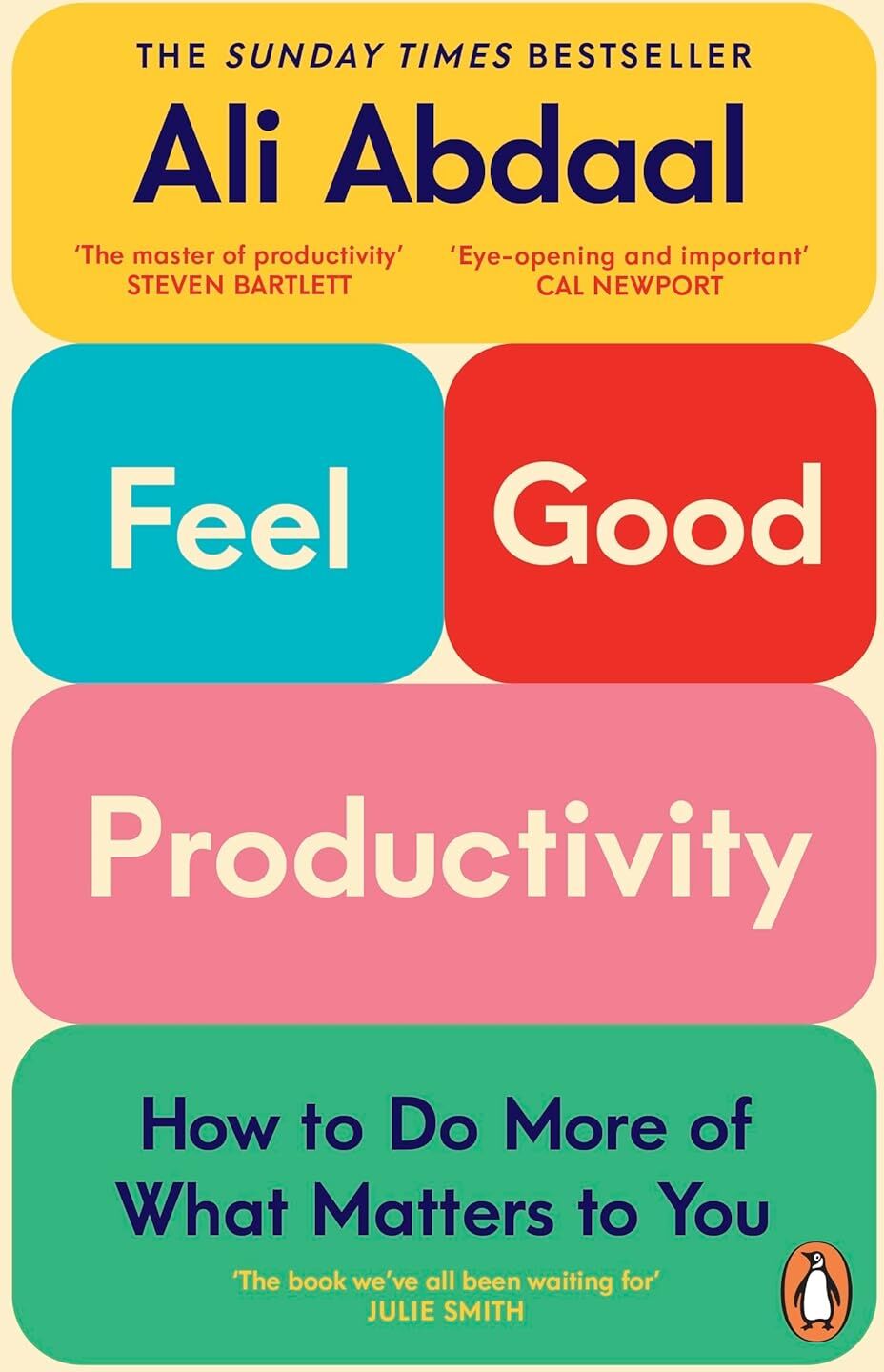
Cornerstone Feel-Good Productivity by Ali Abdaal - Paperback - Bestselling Self-Help & Productivity Book for AdultsDiscover a new approach to productivity with Feel-Good Productivity by Ali Abdaal. This non-fiction paperback book offers a guide to achieving more by finding genuine joy in your work, rather than relying on discipline and willpower. Backed by psychological research and Abdaal's own experience balancing medicine, business, and content creation, the book reframes productivity as a by-product of happiness. It's aimed at anyone feeling stuck in hustle culture and searching for a sustainable, guilt-free way to get things done while protecting their wellbeing and energy. In Feel-Good Productivity, Ali Abdaal dismantles the myth that success requires relentless grind and iron discipline. Instead, he presents a framework built around three 'energisers' — play, power, and people — showing readers how to inject more joy into everyday tasks so that motivation follows naturally rather than being forced. Drawing on peer-reviewed psychology, behaviour, and real-world experience, this book provides a fresh perspective on productivity and happiness.5,99 £*Shipping: 2,99 £Secure redirect to the provider
-
What are reduced variables?
Reduced variables are a set of transformed variables that are used to simplify the analysis of a system or process. These variables are often obtained by scaling or normalizing the original variables to make them more manageable and easier to interpret. By using reduced variables, complex systems can be analyzed and understood more effectively, leading to better insights and decision-making. **
-
Can economic efficiency and productivity develop mutually?
Yes, economic efficiency and productivity can develop mutually. When businesses and industries become more efficient in their operations, they can produce more output with the same amount of input, leading to increased productivity. Similarly, when productivity increases, it can drive economic efficiency by reducing waste and improving resource allocation. Therefore, as businesses and industries focus on improving efficiency and productivity, they can reinforce and support each other's development. **
-
How do I solve an equation with form variables and solution variables?
To solve an equation with form variables and solution variables, you first need to isolate the solution variable on one side of the equation. This involves performing the necessary operations (addition, subtraction, multiplication, division) to move all other variables to the other side of the equation. Once you have isolated the solution variable, you can then solve for it by performing any additional operations needed to simplify the equation. Finally, you can substitute the solution back into the original equation to verify that it satisfies the equation. **
-
What is a local variable and what is the difference to instance variables, class variables, and normal variables in Java?
A local variable in Java is a variable that is declared within a method, constructor, or block of code and is only accessible within that specific scope. It is temporary and exists only for the duration of the method execution. The main difference between local variables, instance variables, class variables, and normal variables in Java is their scope and lifetime. Instance variables are declared within a class but outside of any method and are accessible to all methods within the class. Class variables are declared with the static keyword and are shared among all instances of a class. Normal variables refer to any variable that is not a local, instance, or class variable. **
* All prices are inclusive of VAT and, if applicable, plus shipping costs. The offer information is based on the details provided by the respective shop and is updated through automated processes. Real-time updates do not occur, so deviations can occur in individual cases. ** Note: Parts of this content were created by AI.