Buy easycrm.eu ?
We are moving the project
easycrm.eu .
Are you interested in purchasing the domain
easycrm.eu ?
domain@kv-gmbh.de · 0541-91531010
Buy easycrm.eu ?
How are the nerve cells structured in invertebrates?
In invertebrates, nerve cells are organized into a network called a nerve net. This nerve net consists of interconnected neurons that are spread throughout the body. These neurons are typically simpler in structure compared to the more specialized nerve cells found in vertebrates. The nerve net allows for rapid communication and coordination of responses to stimuli in invertebrates. **
What is the difference between vertebrates and invertebrates?
The main difference between vertebrates and invertebrates is the presence of a backbone. Vertebrates have a backbone made of vertebrae that protects the spinal cord, while invertebrates do not have a backbone. Vertebrates include animals such as mammals, birds, reptiles, amphibians, and fish, while invertebrates include animals such as insects, spiders, worms, and mollusks. Additionally, vertebrates tend to have more complex body systems and are generally larger in size compared to invertebrates. **


Similar search terms for Invertebrates
Top-Angebote
Products related to Invertebrates:
-
The Readers Paradise Psychology of Efficiency: Master Your Mind, Maximize Your Output by Rishav - Self-Help Paperback - Non Fiction Productivity BookDeadlines pile up, distractions multiply, and your to-do list never seems to shrink. Psychology of Efficiency: Master Your Mind, Maximize Your Output by Rishav goes beyond standard time-management advice to tackle the real root of low performance: the mind itself. Rather than offering another planner or app, this paperback guide explores the mental frameworks, habits, and triggers that quietly drain focus and output. Readers are shown how to identify exactly where attention leaks occur and how to close those gaps for good, building sustainable, high-level performance from the inside out. This brand new paperback is built around a simple idea: efficiency is first a psychological skill, not a scheduling trick. Rishav draws on practical psychology to show that thoughts shape actions, and actions determine results, so productivity becomes a manageable skill rather than an overwhelming task.2,99 £*Shipping: 2,99 £Secure redirect to the provider
-
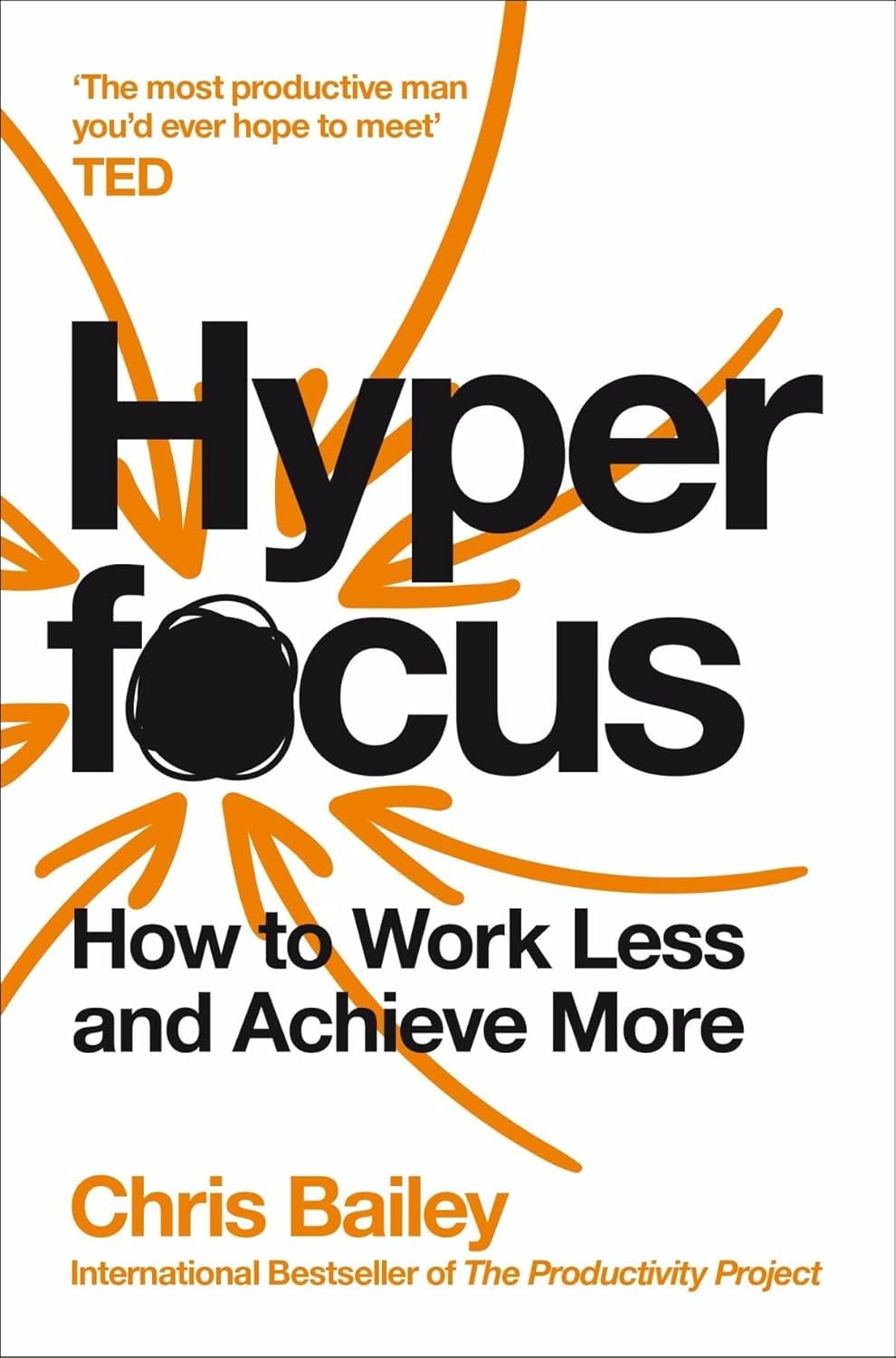
Various Publishers How To Talk To Anyone by Leil Lowndes & Hyperfocus by Chris Bailey - 2 Book Paperback Set - Communication & Productivity Self-Help - NewThis two-book paperback set includes 'How To Talk To Anyone: 92 Little Tricks for Big Success in Relationships' by Leil Lowndes and 'Hyperfocus: How to Be More Productive in a World of Distraction' by Chris Bailey. 'How To Talk To Anyone' delivers practical techniques for confident, memorable conversation, while 'Hyperfocus' offers a science-backed system for reclaiming attention and getting more done with less effort. The books are in new condition, published by HarperCollins and Pan Macmillan respectively, and are suitable for adult readers.9,99 £*Shipping: 2,99 £Secure redirect to the provider
-
Inspire Select 60 Minute Visual Countdown Timer Silent Time Management Clock For Kids Adults Kitchen Classroom Study & Productivity blueMake every minute easier to see, manage, and use with confidence. This easytoread visual countdown timer uses a disappearing colored disk to show how much time remains, helping children and adults build better time awareness. Simply turn the knob to...51,96 $*Shipping: 0,00 $Secure redirect to the provider
-
USA Free Shipping Shop Clear Cable Management Clips Transparent Adhesive Cable Clips For Desk & Wall Wire Organization Clear Cable Management Clips Transparent Adhesive Cable Clips For Desk & Wall Wire OrganizationTired of tangled cords stealing the calm from your space Our 30 pcs of cable management clips turn chaos into order with a virtually invisible solution youll appreciate every day. These clear, selfadhesive organizers are perfect for anyone who wants...49,97 $*Shipping: 0,00 $Secure redirect to the provider



-
Into which seven groups can invertebrates be divided?
Invertebrates can be divided into seven groups: Porifera (sponges), Cnidaria (jellyfish, corals), Platyhelminthes (flatworms), Nematoda (roundworms), Annelida (segmented worms), Mollusca (snails, clams, octopuses), and Arthropoda (insects, spiders, crustaceans). Each group has its own unique characteristics and includes a wide variety of species with diverse adaptations for survival. **
-
What are the characteristics of vertebrates, invertebrates, and insects?
Vertebrates are animals with a backbone or spinal column, including mammals, birds, reptiles, amphibians, and fish. They typically have a well-developed internal skeleton and a complex nervous system. Invertebrates, on the other hand, are animals without a backbone, such as insects, arachnids, mollusks, and crustaceans. They often have exoskeletons for support and protection. Insects are a specific type of invertebrate characterized by having six legs, three body segments (head, thorax, and abdomen), and often wings. They are the most diverse group of animals on Earth, with over a million described species. **
-
Why are there mainly electrical synapses in fish and invertebrates?
Electrical synapses are more common in fish and invertebrates because they allow for faster and more direct communication between neurons. This is important in these organisms for rapid responses to environmental stimuli and for coordinating movements. Additionally, electrical synapses are more energy-efficient compared to chemical synapses, which is advantageous for organisms with simpler nervous systems. Overall, the prevalence of electrical synapses in fish and invertebrates reflects their need for efficient and rapid neural communication in their environments. **
-
What is the difference between the axons of vertebrates and invertebrates?
The main difference between the axons of vertebrates and invertebrates lies in their myelination. In vertebrates, axons are often myelinated, which means they are surrounded by a fatty substance that speeds up the transmission of electrical signals. In contrast, invertebrate axons are typically unmyelinated, which can result in slower signal transmission. Additionally, vertebrate axons tend to be larger in diameter compared to invertebrate axons, allowing for faster conduction of nerve impulses. **

How does the conduction of excitation work in vertebrates and invertebrates?
In vertebrates, excitation is conducted through the nervous system, which consists of neurons that transmit electrical signals. When a stimulus is detected, such as touch or sound, sensory neurons transmit the signal to the central nervous system, where it is processed and a response is generated. This response is then transmitted through motor neurons to the appropriate muscles or glands. In invertebrates, excitation is also conducted through the nervous system, but their nervous system is less centralized than in vertebrates. Invertebrates have a network of neurons that transmit signals throughout the body, allowing for rapid responses to stimuli. Some invertebrates, such as insects, also have specialized sensory organs that detect specific stimuli and transmit signals to the nervous system for processing and response. **
Can economic efficiency and productivity develop mutually?
Yes, economic efficiency and productivity can develop mutually. When businesses and industries become more efficient in their operations, they can produce more output with the same amount of input, leading to increased productivity. Similarly, when productivity increases, it can drive economic efficiency by reducing waste and improving resource allocation. Therefore, as businesses and industries focus on improving efficiency and productivity, they can reinforce and support each other's development. **
Top-Angebote
Products related to Invertebrates:
-
Multisell Products Hub DIY Voice Control Light Switch Module For Smart Home Automation With Tuya, Alexa & Google Home Integration DIY Voice Control Light Switch Module For Smart Home Automation With Tuya, Alexa & Google Home IntegrationUpgrade your home with the DIY Light Switch Module, bringing cuttingedge smart home automation to your fingertips. Perfect for those who want seamless control over their lighting and appliances, this module easily integrates with Alexa and Google...34,97 $*Shipping: 0,00 $Secure redirect to the provider
-
Various Publishers How to Talk to Anyone, Next Conversation & Psychology of Management - 3 Book Paperback Set - Communication, Leadership & Management PsychologyThis 3-book collection set brings together three practical, people-focused reads for anyone who wants to communicate better and lead more effectively. Leil Lowndes' classic 'How to Talk to Anyone' pairs with Jefferson Fisher's 'Next Conversation' and a foundational 'Psychology of Management' title to cover everyday conversation, conflict resolution, and workplace psychology in one bundle. Whether you are prepping for interviews, managing a team, or simply want to feel more confident in social situations, this paperback set offers accessible, actionable guidance you can start using immediately. The set includes 'How to Talk to Anyone' by Leil Lowndes, 'Next Conversation' by Jefferson Fisher, and 'Psychology of Management'.20,99 £*Shipping: 2,99 £Secure redirect to the provider
-
The Readers Paradise Psychology of Efficiency: Master Your Mind, Maximize Your Output by Rishav - Self-Help Paperback - Non Fiction Productivity BookDeadlines pile up, distractions multiply, and your to-do list never seems to shrink. Psychology of Efficiency: Master Your Mind, Maximize Your Output by Rishav goes beyond standard time-management advice to tackle the real root of low performance: the mind itself. Rather than offering another planner or app, this paperback guide explores the mental frameworks, habits, and triggers that quietly drain focus and output. Readers are shown how to identify exactly where attention leaks occur and how to close those gaps for good, building sustainable, high-level performance from the inside out. This brand new paperback is built around a simple idea: efficiency is first a psychological skill, not a scheduling trick. Rishav draws on practical psychology to show that thoughts shape actions, and actions determine results, so productivity becomes a manageable skill rather than an overwhelming task.2,99 £*Shipping: 2,99 £Secure redirect to the provider
-
Various Publishers How To Talk To Anyone by Leil Lowndes & Hyperfocus by Chris Bailey - 2 Book Paperback Set - Communication & Productivity Self-Help - NewThis two-book paperback set includes 'How To Talk To Anyone: 92 Little Tricks for Big Success in Relationships' by Leil Lowndes and 'Hyperfocus: How to Be More Productive in a World of Distraction' by Chris Bailey. 'How To Talk To Anyone' delivers practical techniques for confident, memorable conversation, while 'Hyperfocus' offers a science-backed system for reclaiming attention and getting more done with less effort. The books are in new condition, published by HarperCollins and Pan Macmillan respectively, and are suitable for adult readers.9,99 £*Shipping: 2,99 £Secure redirect to the provider
-
How are the nerve cells structured in invertebrates?
In invertebrates, nerve cells are organized into a network called a nerve net. This nerve net consists of interconnected neurons that are spread throughout the body. These neurons are typically simpler in structure compared to the more specialized nerve cells found in vertebrates. The nerve net allows for rapid communication and coordination of responses to stimuli in invertebrates. **
-
What is the difference between vertebrates and invertebrates?
The main difference between vertebrates and invertebrates is the presence of a backbone. Vertebrates have a backbone made of vertebrae that protects the spinal cord, while invertebrates do not have a backbone. Vertebrates include animals such as mammals, birds, reptiles, amphibians, and fish, while invertebrates include animals such as insects, spiders, worms, and mollusks. Additionally, vertebrates tend to have more complex body systems and are generally larger in size compared to invertebrates. **
-
Into which seven groups can invertebrates be divided?
Invertebrates can be divided into seven groups: Porifera (sponges), Cnidaria (jellyfish, corals), Platyhelminthes (flatworms), Nematoda (roundworms), Annelida (segmented worms), Mollusca (snails, clams, octopuses), and Arthropoda (insects, spiders, crustaceans). Each group has its own unique characteristics and includes a wide variety of species with diverse adaptations for survival. **
-
What are the characteristics of vertebrates, invertebrates, and insects?
Vertebrates are animals with a backbone or spinal column, including mammals, birds, reptiles, amphibians, and fish. They typically have a well-developed internal skeleton and a complex nervous system. Invertebrates, on the other hand, are animals without a backbone, such as insects, arachnids, mollusks, and crustaceans. They often have exoskeletons for support and protection. Insects are a specific type of invertebrate characterized by having six legs, three body segments (head, thorax, and abdomen), and often wings. They are the most diverse group of animals on Earth, with over a million described species. **
Similar search terms for Invertebrates
-
Inspire Select 60 Minute Visual Countdown Timer Silent Time Management Clock For Kids Adults Kitchen Classroom Study & Productivity blueMake every minute easier to see, manage, and use with confidence. This easytoread visual countdown timer uses a disappearing colored disk to show how much time remains, helping children and adults build better time awareness. Simply turn the knob to...51,96 $*Shipping: 0,00 $Secure redirect to the provider
-
USA Free Shipping Shop Clear Cable Management Clips Transparent Adhesive Cable Clips For Desk & Wall Wire Organization Clear Cable Management Clips Transparent Adhesive Cable Clips For Desk & Wall Wire OrganizationTired of tangled cords stealing the calm from your space Our 30 pcs of cable management clips turn chaos into order with a virtually invisible solution youll appreciate every day. These clear, selfadhesive organizers are perfect for anyone who wants...49,97 $*Shipping: 0,00 $Secure redirect to the provider
-
Icon Books How to Be a Productivity Ninja by Graham Allcott - Updated Edition - Paperback - Business & Self-Help - Time Management BookDiscover how to cut through digital noise and regain focus with 'How to Be a Productivity Ninja' by Graham Allcott. This updated edition of the modern business classic offers practical, evidence-based techniques to help you manage your attention, energy, and workload in a busy world. Written with humor, it provides a genuinely usable system for busy professionals feeling overwhelmed by email, notifications, and endless to-do lists. The book introduces 'The Way of the Productivity Ninja', a set of principles built around Ruthlessness, Mindfulness, Zen-Like Calm, Weapon Selection, Chi, and Stealth; Camouflage. First published to widespread acclaim and fully updated for 2019, this book is ideal for anyone looking to improve their productivity and work-life balance.2,99 £*Shipping: 2,99 £Secure redirect to the provider
-
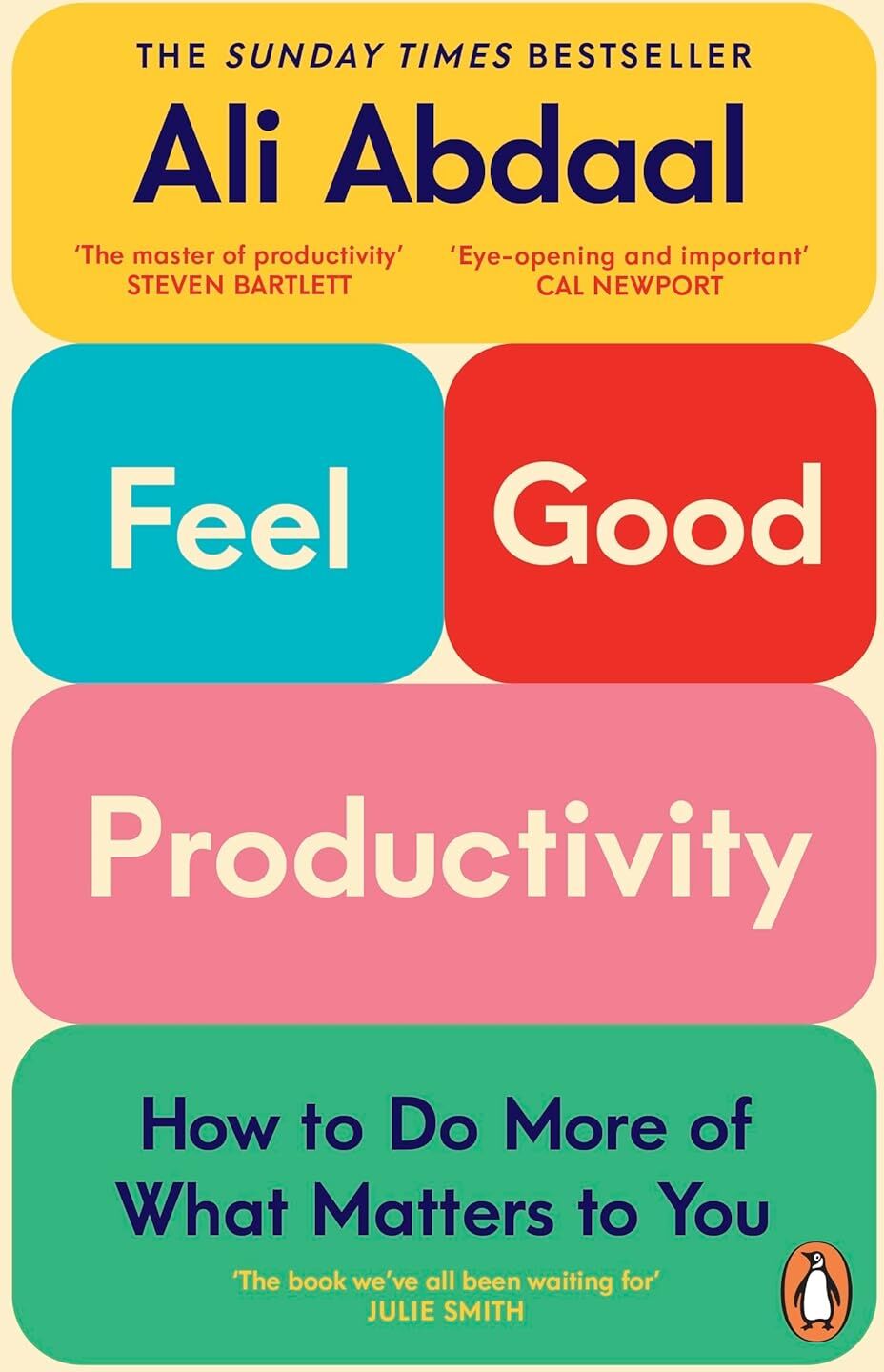
Cornerstone Feel-Good Productivity by Ali Abdaal - Paperback - Bestselling Self-Help & Productivity Book for AdultsDiscover a new approach to productivity with Feel-Good Productivity by Ali Abdaal. This non-fiction paperback book offers a guide to achieving more by finding genuine joy in your work, rather than relying on discipline and willpower. Backed by psychological research and Abdaal's own experience balancing medicine, business, and content creation, the book reframes productivity as a by-product of happiness. It's aimed at anyone feeling stuck in hustle culture and searching for a sustainable, guilt-free way to get things done while protecting their wellbeing and energy. In Feel-Good Productivity, Ali Abdaal dismantles the myth that success requires relentless grind and iron discipline. Instead, he presents a framework built around three 'energisers' — play, power, and people — showing readers how to inject more joy into everyday tasks so that motivation follows naturally rather than being forced. Drawing on peer-reviewed psychology, behaviour, and real-world experience, this book provides a fresh perspective on productivity and happiness.5,99 £*Shipping: 2,99 £Secure redirect to the provider
-
Why are there mainly electrical synapses in fish and invertebrates?
Electrical synapses are more common in fish and invertebrates because they allow for faster and more direct communication between neurons. This is important in these organisms for rapid responses to environmental stimuli and for coordinating movements. Additionally, electrical synapses are more energy-efficient compared to chemical synapses, which is advantageous for organisms with simpler nervous systems. Overall, the prevalence of electrical synapses in fish and invertebrates reflects their need for efficient and rapid neural communication in their environments. **
-
What is the difference between the axons of vertebrates and invertebrates?
The main difference between the axons of vertebrates and invertebrates lies in their myelination. In vertebrates, axons are often myelinated, which means they are surrounded by a fatty substance that speeds up the transmission of electrical signals. In contrast, invertebrate axons are typically unmyelinated, which can result in slower signal transmission. Additionally, vertebrate axons tend to be larger in diameter compared to invertebrate axons, allowing for faster conduction of nerve impulses. **
-
How does the conduction of excitation work in vertebrates and invertebrates?
In vertebrates, excitation is conducted through the nervous system, which consists of neurons that transmit electrical signals. When a stimulus is detected, such as touch or sound, sensory neurons transmit the signal to the central nervous system, where it is processed and a response is generated. This response is then transmitted through motor neurons to the appropriate muscles or glands. In invertebrates, excitation is also conducted through the nervous system, but their nervous system is less centralized than in vertebrates. Invertebrates have a network of neurons that transmit signals throughout the body, allowing for rapid responses to stimuli. Some invertebrates, such as insects, also have specialized sensory organs that detect specific stimuli and transmit signals to the nervous system for processing and response. **
-
Can economic efficiency and productivity develop mutually?
Yes, economic efficiency and productivity can develop mutually. When businesses and industries become more efficient in their operations, they can produce more output with the same amount of input, leading to increased productivity. Similarly, when productivity increases, it can drive economic efficiency by reducing waste and improving resource allocation. Therefore, as businesses and industries focus on improving efficiency and productivity, they can reinforce and support each other's development. **
* All prices are inclusive of VAT and, if applicable, plus shipping costs. The offer information is based on the details provided by the respective shop and is updated through automated processes. Real-time updates do not occur, so deviations can occur in individual cases. ** Note: Parts of this content were created by AI.