Buy easycrm.eu ?
We are moving the project
easycrm.eu .
Are you interested in purchasing the domain
easycrm.eu ?
domain@kv-gmbh.de · 0541-91531010
Buy easycrm.eu ?
Can economic efficiency and productivity develop mutually?
Yes, economic efficiency and productivity can develop mutually. When businesses and industries become more efficient in their operations, they can produce more output with the same amount of input, leading to increased productivity. Similarly, when productivity increases, it can drive economic efficiency by reducing waste and improving resource allocation. Therefore, as businesses and industries focus on improving efficiency and productivity, they can reinforce and support each other's development. **
What is the history of the 7th century AD (700 AD)?
The 7th century AD was a significant period in history marked by various events. In this century, the Islamic prophet Muhammad founded Islam in the early 600s, leading to the rapid expansion of the Islamic empire. The Byzantine Empire and the Sassanian Empire were major powers in the region, and their conflicts shaped the political landscape. Additionally, this century saw the rise of the Tang Dynasty in China and the spread of Buddhism in East Asia. Overall, the 7th century AD was a time of great change and transformation in various parts of the world. **

Similar search terms for Ad-libs
Top-Angebote
Products related to Ad-libs:
-
Parpato Vite ad Ovest 2022The "Parpato" from the Sicilian winery Vite ad Ovest is a red wine with a fresh and juicy style inspired by Burgundian winemaking techniques. The Parpato is a rare and ancient native black grape variety of Western Sicily, the region where the artisanal reality of Vite ad Ovest operates. Some hypotheses suggest that it may be a biotype of Carignano, while other theories point to a distant relationship with Grenache, a noble grape of the Mediterranean. Vite ad Ovest's Parpato comes solely from Parpato grapes grown in the district of Pellegrino, in the territory of Marsala, applying the principles of organic agriculture. The vines are relatively young and grow on clay-rich soils at an altitude of about 100 meters above sea level. Harvesting is entirely done by hand in the second decade of September, and the grapes are then vinified in the Burgundian style through 15 days of maceration on the skins in open-top vats, with 50% whole cluster and the remaining 50% destemmed. Alcoholic fermentation relies solely on the yeasts present on the grapes and in the winemaking environment and is followed by a maturation of at least 9 months on fine lees, after which the wine is bottled without undergoing clarification or filtration operations. The final release onto the market occurs after a minimum of 2 years of further bottle aging. Vite ad Ovest's Parpato has a bright ruby red color with purple hues. The aromatic range presents hints of small red and black fruits such as blackberry and cherry, accompanied by delicate herbal notes. On the palate, it is rich yet at the same time smooth and lively, with light tannins and juicy freshness guiding the enveloping and persistent finish.20,00 £*Shipping: 48,00 £Secure redirect to the provider
-
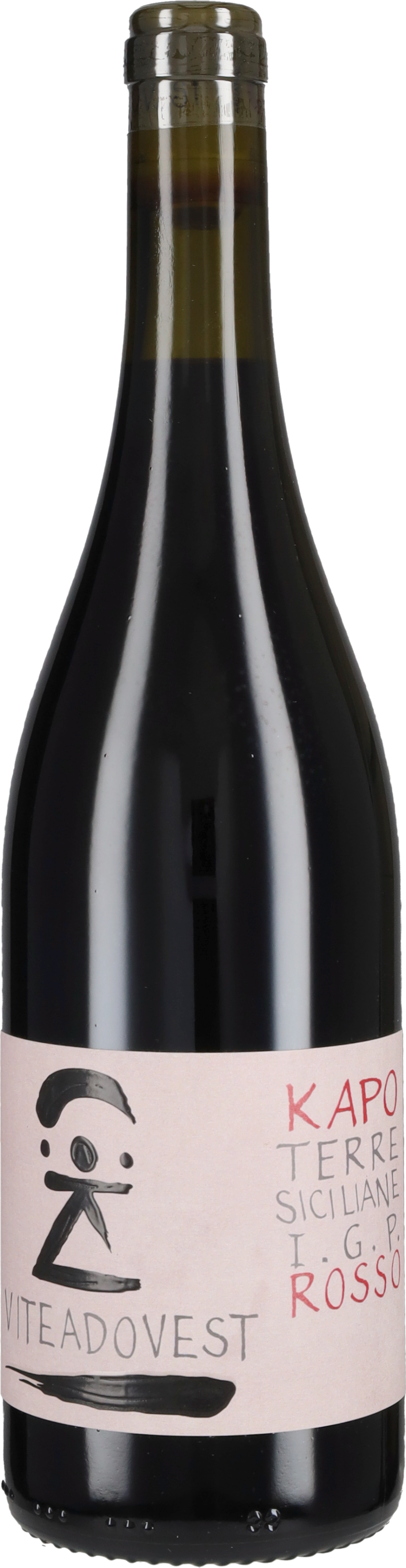
'Kapo' Vite ad Ovest 2018macerate on the skins for 2 weeks. The must ferments in steel tanks spontaneously at a controlled temperature of 20 degrees. The liquid then ages for 12 months in steel and is bottled without undergoing filtration and clarification. The "Kapo" red wine from the winery Vite ad Ovest appears with an intense, deep, and material ruby red color. Vigorous aromas of fruit such as plum, red berries, and cherries are symphonically combined with notes of violet and dried rose, which tease the olfactory perception and invite to a new sip. The taste is intense and harmonious, extremely balanced, multifaceted, without being banal. The wine is, thanks to its minerality, easy to drink and satisfying, accompanied by an elegant tannin and a pleasant freshness. A label that respects the peculiarities of the Sicilian territory and best expresses the Mediterranean scents from which it comes.macerate on the skins for 2 weeks. The must ferments in steel tanks spontaneously at a controlled temperature of 20 degrees. The liquid then ages for 12 months in steel and is bottled without undergoing filtration and clarification. The "Kapo" red wine from the winery Vite ad Ovest appears with an intense, deep, and material ruby red color. Vigorous aromas of fruit such as plum, red berries, and cherries are symphonically combined with notes of violet and dried rose, which tease the olfactory perception and invite to a new sip. The taste is intense and harmonious, extremely balanced, multifaceted, without being banal. The wine is, thanks to its minerality, easy to drink and satisfying, accompanied by an elegant tannin and a pleasant freshness. A label that respects the peculiarities of the Sicilian territory and best expresses the Mediterranean scents from which it comes.22,00 £*Shipping: 48,00 £Secure redirect to the provider


-
Who chose Ad Hit?
Ad Hit was chosen by the marketing team at our company. After evaluating different advertising options, they decided that Ad Hit was the best platform to reach our target audience and achieve our marketing goals. The team considered factors such as audience demographics, ad placement options, and cost-effectiveness before making the decision to go with Ad Hit. **
-
What is the difference between efficiency and productivity?
Efficiency refers to how well resources are utilized to achieve a specific goal or output, while productivity measures the output or results generated from a specific amount of input or resources. Efficiency focuses on minimizing waste and maximizing output with the resources available, while productivity is a measure of how much output is produced relative to the input used. In essence, efficiency is about doing things right, while productivity is about doing the right things. **
-
What are the connections between efficiency and productivity?
Efficiency and productivity are closely connected in that efficiency refers to the ability to accomplish a task with minimal waste, effort, or cost, while productivity refers to the rate at which goods or services are produced. When a process or system is efficient, it can lead to increased productivity because it allows for more output to be generated with the same amount of input. Conversely, when productivity is high, it often indicates that the resources and processes are being used efficiently. Therefore, improving efficiency can lead to increased productivity, and vice versa, as they both contribute to the overall effectiveness of a business or organization. **
-
Does increasing productivity lead to higher economic efficiency?
Yes, increasing productivity can lead to higher economic efficiency. When a company or economy can produce more output with the same input of resources, it can lead to lower production costs and higher profits. This can also lead to lower prices for consumers, which can increase overall economic welfare. Additionally, higher productivity can lead to increased competitiveness in the global market, which can further contribute to economic efficiency. **

What is the difference between productivity, efficiency, and profitability?
Productivity refers to the amount of output produced per unit of input, such as time or resources. Efficiency, on the other hand, focuses on how well resources are used to achieve a specific goal or output. Profitability, meanwhile, is a measure of how efficiently a company generates profit relative to its costs and expenses. In essence, productivity is about output per input, efficiency is about resource utilization, and profitability is about the bottom line of a business. **
What is the relationship between productivity and economic efficiency?
Productivity and economic efficiency are closely related concepts. Productivity refers to the amount of output produced per unit of input, such as labor or capital. When productivity increases, more output is produced with the same amount of input, leading to greater economic efficiency. Economic efficiency, on the other hand, refers to the optimal allocation of resources to maximize output and minimize waste. Therefore, higher productivity often leads to greater economic efficiency as resources are used more effectively to produce goods and services. Conversely, lower productivity can lead to inefficiencies in resource allocation and reduced overall economic efficiency. **
Top-Angebote
Products related to Ad-libs:
-
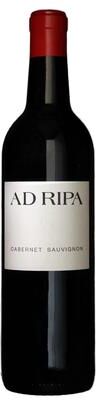
"""Ad Ripa""" """Ad Ripa Happy Canyon Cabernet Sauvignon 2022 Red Wine - California""""""Blend: 100% Cabernet Sauvignon Derived from young vines at China Blue and Happy Canyon Vineyards, the 2022 Cabernet Sauvignon opens with a classic bouquet of leather, dried herbs and dark chocolate, set against a core of red and black fruit. The..."46,99 $*Shipping: 0,00 $Secure redirect to the provider
-
Can economic efficiency and productivity develop mutually?
Yes, economic efficiency and productivity can develop mutually. When businesses and industries become more efficient in their operations, they can produce more output with the same amount of input, leading to increased productivity. Similarly, when productivity increases, it can drive economic efficiency by reducing waste and improving resource allocation. Therefore, as businesses and industries focus on improving efficiency and productivity, they can reinforce and support each other's development. **
-
What is the history of the 7th century AD (700 AD)?
The 7th century AD was a significant period in history marked by various events. In this century, the Islamic prophet Muhammad founded Islam in the early 600s, leading to the rapid expansion of the Islamic empire. The Byzantine Empire and the Sassanian Empire were major powers in the region, and their conflicts shaped the political landscape. Additionally, this century saw the rise of the Tang Dynasty in China and the spread of Buddhism in East Asia. Overall, the 7th century AD was a time of great change and transformation in various parts of the world. **
-
Who chose Ad Hit?
Ad Hit was chosen by the marketing team at our company. After evaluating different advertising options, they decided that Ad Hit was the best platform to reach our target audience and achieve our marketing goals. The team considered factors such as audience demographics, ad placement options, and cost-effectiveness before making the decision to go with Ad Hit. **
-
What is the difference between efficiency and productivity?
Efficiency refers to how well resources are utilized to achieve a specific goal or output, while productivity measures the output or results generated from a specific amount of input or resources. Efficiency focuses on minimizing waste and maximizing output with the resources available, while productivity is a measure of how much output is produced relative to the input used. In essence, efficiency is about doing things right, while productivity is about doing the right things. **
Similar search terms for Ad-libs
-
Parpato Vite ad Ovest 2022The "Parpato" from the Sicilian winery Vite ad Ovest is a red wine with a fresh and juicy style inspired by Burgundian winemaking techniques. The Parpato is a rare and ancient native black grape variety of Western Sicily, the region where the artisanal reality of Vite ad Ovest operates. Some hypotheses suggest that it may be a biotype of Carignano, while other theories point to a distant relationship with Grenache, a noble grape of the Mediterranean. Vite ad Ovest's Parpato comes solely from Parpato grapes grown in the district of Pellegrino, in the territory of Marsala, applying the principles of organic agriculture. The vines are relatively young and grow on clay-rich soils at an altitude of about 100 meters above sea level. Harvesting is entirely done by hand in the second decade of September, and the grapes are then vinified in the Burgundian style through 15 days of maceration on the skins in open-top vats, with 50% whole cluster and the remaining 50% destemmed. Alcoholic fermentation relies solely on the yeasts present on the grapes and in the winemaking environment and is followed by a maturation of at least 9 months on fine lees, after which the wine is bottled without undergoing clarification or filtration operations. The final release onto the market occurs after a minimum of 2 years of further bottle aging. Vite ad Ovest's Parpato has a bright ruby red color with purple hues. The aromatic range presents hints of small red and black fruits such as blackberry and cherry, accompanied by delicate herbal notes. On the palate, it is rich yet at the same time smooth and lively, with light tannins and juicy freshness guiding the enveloping and persistent finish.20,00 £*Shipping: 48,00 £Secure redirect to the provider
-
'Kapo' Vite ad Ovest 2018macerate on the skins for 2 weeks. The must ferments in steel tanks spontaneously at a controlled temperature of 20 degrees. The liquid then ages for 12 months in steel and is bottled without undergoing filtration and clarification. The "Kapo" red wine from the winery Vite ad Ovest appears with an intense, deep, and material ruby red color. Vigorous aromas of fruit such as plum, red berries, and cherries are symphonically combined with notes of violet and dried rose, which tease the olfactory perception and invite to a new sip. The taste is intense and harmonious, extremely balanced, multifaceted, without being banal. The wine is, thanks to its minerality, easy to drink and satisfying, accompanied by an elegant tannin and a pleasant freshness. A label that respects the peculiarities of the Sicilian territory and best expresses the Mediterranean scents from which it comes.macerate on the skins for 2 weeks. The must ferments in steel tanks spontaneously at a controlled temperature of 20 degrees. The liquid then ages for 12 months in steel and is bottled without undergoing filtration and clarification. The "Kapo" red wine from the winery Vite ad Ovest appears with an intense, deep, and material ruby red color. Vigorous aromas of fruit such as plum, red berries, and cherries are symphonically combined with notes of violet and dried rose, which tease the olfactory perception and invite to a new sip. The taste is intense and harmonious, extremely balanced, multifaceted, without being banal. The wine is, thanks to its minerality, easy to drink and satisfying, accompanied by an elegant tannin and a pleasant freshness. A label that respects the peculiarities of the Sicilian territory and best expresses the Mediterranean scents from which it comes.22,00 £*Shipping: 48,00 £Secure redirect to the provider
-
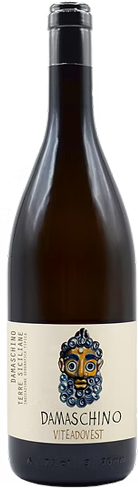
Damaschino Vite ad Ovest 2022Damaschino from the Sicilian company Vite ad Ovest is a macerated white wine with a refined essence, the result of artisanal processing in terracotta amphorae of the Damaschino grape variety. The name of this ancient white grape variety immediately brings to mind its Middle Eastern origin, to be found in particular in the historic city of Damascus, the capital of Syria. The grape landed in Sicily during the Arab domination, finding its way to the western side of the island, where the presence of the Arabs was greatest. Damaschino usually produces a light, drinkable wine with a low alcohol content.Vite ad Ovest Damaschino is made exclusively from grapes of the white grape variety of the same name grown in Contrada Chelbi, in the Mazara del Vallo area in the province of Trapani. Here the vines are grown using sustainable practices on sandy and calcareous soils at an altitude of 240 metres above sea level. Following manual harvesting, carried out during the first ten days of September, the grapes are mellowed in stainless steel tanks for spontaneous alcoholic fermentation accompanied by 5 days of maceration on the skins. The subsequent malolactic fermentation takes place in terracotta amphorae, the same wine container where the mass remains to mature for a period of 9 months, spent on the fine lees.The Damaschino signed Vite ad Ovest has a pale golden yellow colour. The aromatic bouquet offers fruity hints of fresh pear and tones of white flowers that combine with light hints of rosemary and earthy notes on the finish. The taste development is subtle but multifaceted, characterised by a slender and persistent finish of beautiful aromatic fragrance. Thanks to its lightness, this artisanal white is perfect to start the meal in the right way, perhaps paired with traditional Sicilian seafood hors d'oeuvres.18,00 £*Shipping: 48,00 £Secure redirect to the provider
-
What are the connections between efficiency and productivity?
Efficiency and productivity are closely connected in that efficiency refers to the ability to accomplish a task with minimal waste, effort, or cost, while productivity refers to the rate at which goods or services are produced. When a process or system is efficient, it can lead to increased productivity because it allows for more output to be generated with the same amount of input. Conversely, when productivity is high, it often indicates that the resources and processes are being used efficiently. Therefore, improving efficiency can lead to increased productivity, and vice versa, as they both contribute to the overall effectiveness of a business or organization. **
-
Does increasing productivity lead to higher economic efficiency?
Yes, increasing productivity can lead to higher economic efficiency. When a company or economy can produce more output with the same input of resources, it can lead to lower production costs and higher profits. This can also lead to lower prices for consumers, which can increase overall economic welfare. Additionally, higher productivity can lead to increased competitiveness in the global market, which can further contribute to economic efficiency. **
-
What is the difference between productivity, efficiency, and profitability?
Productivity refers to the amount of output produced per unit of input, such as time or resources. Efficiency, on the other hand, focuses on how well resources are used to achieve a specific goal or output. Profitability, meanwhile, is a measure of how efficiently a company generates profit relative to its costs and expenses. In essence, productivity is about output per input, efficiency is about resource utilization, and profitability is about the bottom line of a business. **
-
What is the relationship between productivity and economic efficiency?
Productivity and economic efficiency are closely related concepts. Productivity refers to the amount of output produced per unit of input, such as labor or capital. When productivity increases, more output is produced with the same amount of input, leading to greater economic efficiency. Economic efficiency, on the other hand, refers to the optimal allocation of resources to maximize output and minimize waste. Therefore, higher productivity often leads to greater economic efficiency as resources are used more effectively to produce goods and services. Conversely, lower productivity can lead to inefficiencies in resource allocation and reduced overall economic efficiency. **
* All prices are inclusive of VAT and, if applicable, plus shipping costs. The offer information is based on the details provided by the respective shop and is updated through automated processes. Real-time updates do not occur, so deviations can occur in individual cases. ** Note: Parts of this content were created by AI.